
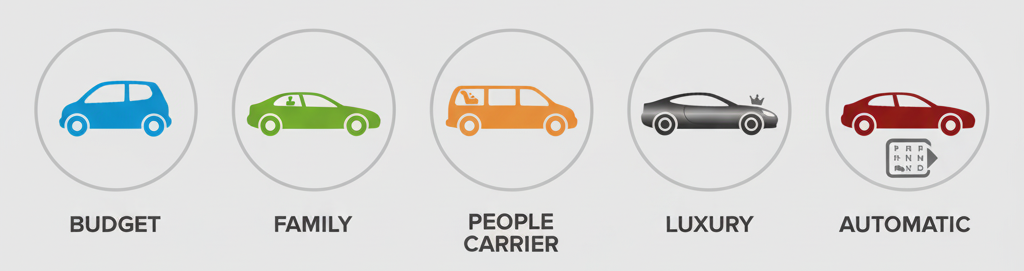
Compare luxury car hire at Geneva Airport: Swiss vs French side, real prices, age and deposit rules, insurance gaps, and Alpine driving rules.
Geneva Airport splits into a Swiss side and a French side, and which one you book from changes your price, your paperwork, and which roads you can drive on without a fine. This guide covers what actually matters: current pricing by category, age and deposit rules for exotic cars, the insurance gaps that catch people out, and the driving laws worth knowing before you take a high-performance rental onto an Alpine pass, including Switzerland’s wealth-based speeding fines and what you need if you’re continuing into France.
Last reviewed September 2026. Prices are converted from Swiss francs at roughly £0.91 per CHF; check a live rate before budgeting a large deposit, since currency movement of a few percent matters at these values.
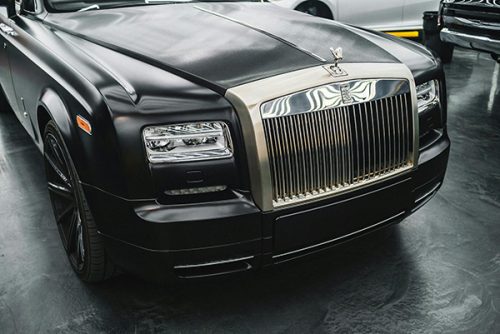
What Luxury Actually Costs at Geneva Airport
Rates move with the season and the operator, but here’s what to expect per day. Peak ski weekends (December to February Saturdays) push these up 30 to 50%.
| Category | Typical models | Daily rate (Swiss side) | Best for |
|---|---|---|---|
| Premium sedan | Mercedes E-Class, BMW 5 Series, Audi A6 | £135 to £230 | Business travel, airport-to-city |
| Luxury SUV | Range Rover, BMW X5, Audi Q7 | £225 to £410 | Ski luggage, mountain roads, families |
| Sports car / supercar | Porsche 911, Ferrari, Lamborghini | £545 to £1,640+ | Scenic drives, self-drive occasions |
| Convertible | Mercedes C-Class Cabriolet, BMW 4 Series | £275 to £500 | Lakeside routes in summer |
| Chauffeured luxury | Mercedes S-Class with driver | From £365 (half-day) | Meetings, events, no driving required |
French-side rates run 10 to 20% lower for the same category, quoted in euros, but the saving can disappear once you factor in a Swiss vignette and cross-border insurance excess. See below.
Swiss Side or French Side: The Decision That Actually Matters
All arrivals land on the Swiss side of GVA. A door in the terminal leads through to the French sector (Secteur France, in Ferney-Voltaire), where several of the same rental brands also operate. The two desks run as entirely separate national operations, and for a high-value rental the difference is worth understanding before you book.
| Swiss side | French side | |
|---|---|---|
| Registration | Swiss plates (CH) | French plates (FR) |
| Motorway vignette | Included, already affixed | Not included. Buy separately if driving Swiss motorways |
| Pricing currency | Swiss francs, Swiss VAT | Euros, French VAT |
| Winter prep | Fleet set up for Alpine conditions | Varies by operator |
| Best if you’re going to | Verbier, Zermatt, Lausanne, Swiss ski resorts | Chamonix, Annecy, Lyon, French Alps |
Either car can legally cross into the other country. If you rent French-side and plan to use Swiss motorways, buy the vignette (£36, valid to the end of the following year) at the border, a Swiss petrol station, or as an e-vignette through the Federal Office for Customs and Border Security. Driving without one on a Swiss motorway carries a fine on top of the sticker cost itself.
Full breakdown of each option: French vs Swiss side comparison.
One-Way and Cross-Border Drop-Off Fees
If your itinerary ends somewhere other than GVA, the drop-off fee depends on where and which side you started from. Same brand, same country (Swiss to Swiss, French to French) typically runs free to around £45 to £90. Crossing the border on drop-off (Swiss side pickup, French return, or vice versa) usually costs £135 to £365, and it’s charged by the rental brand, not a border authority.
On a luxury booking this fee scales with the car category, so confirm it before you book if your route ends in Chamonix, Annecy or Lyon rather than back at GVA.
Age, Licence and Deposit: What Gets Checked on a High-End Rental
Standard sedans and SUVs usually follow the normal 21 to 25 minimum age rule. Sports cars and anything badged Ferrari, Lamborghini or Porsche GT-series sit under stricter terms industry-wide, and Geneva operators are no exception:
- Minimum age: 25 for most performance cars, rising to 30 on the highest-end supercars at some agencies
- Licence held: usually 2 to 3 years minimum, with a clean record
- Deposit: a credit card hold, typically £2,700 to £13,600 depending on the model. This is a hold, not a charge, released 3 to 7 days after a clean return
- Payment method: a credit card in the driver’s own name; debit cards are rarely accepted for the deposit
These figures vary by supplier and by exact model, so confirm the specific terms when you book rather than assuming the lowest number applies.
Mileage Limits and Fuel Policy
Premium sedans and SUVs are usually offered with unlimited mileage on a weekly rental. Sports cars and supercars are frequently capped, commonly 100 to 200 miles per day, with an excess charge per mile beyond that, sometimes £2 to £5 a mile on the highest-end models.
If you’re planning a longer Alpine circuit rather than a short scenic drive, ask for the mileage cap in writing before you sign, since it can turn an attractive daily rate into a much larger bill.
Fuel policy on nearly all GVA luxury rentals is full-to-full: you collect with a full tank and return it full, with a refuelling surcharge if you don’t. High-performance engines are usually specified for premium fuel, so check which grade before you fill up at an unfamiliar station.
Where Standard Insurance Stops Covering You
This is the part people skip and regret. A basic collision damage waiver is priced and written for a compact hatchback, not a car worth six figures. Many policies cap payouts or exclude “prestige” and “exotic” categories outright.
Before you sign for anything above a premium sedan, check three things:
- Agreed value, not market value. If the car is written off, you want a pre-agreed payout figure, not a depreciated valuation decided after the fact.
- The excess amount. On a supercar this can run into five figures. Ask whether excess reduction is available and what it costs per day.
- Whether your own credit card cover transfers. Most personal auto policies and many credit-card rental protections explicitly exclude vehicles above a certain value. Call your insurer before you fly, not at the counter.
Driving Rules That Catch Out Visitors, Especially in a Fast Car
Switzerland’s blood alcohol limit is 0.05%, dropping to effectively zero (0.01%) for new licence holders in their first three years. Handheld phone use carries an on-the-spot fine. None of that is unusual for Europe.
What is unusual: Switzerland calculates speeding fines against the driver’s income and wealth, with no upper limit written into the law. It’s not theoretical. A Ferrari Testarossa driver was fined the equivalent of roughly £215,000 for a 137 km/h village speed after a string of prior offences.
A driver in a rented Mercedes SLS AMG faced a fine north of £600,000 for a 180 mph run on a motorway. This isn’t a niche rule for locals; it applies to any driver caught on Swiss roads, rental or not, and cantonal police can pull over any vehicle for a random breath test without cause. Full detail from Swiss public broadcaster SWI: wealth-based speeding fines explained.
On the French side, the once-mandatory in-car breathalyzer kit law is worth flagging because a lot of older travel advice still repeats it. The requirement to carry one was formally scrapped by the French government in January 2020, and the fine had already gone unenforced for years before that. You don’t need to source one for a French-side rental.
Continuing Into France: Crit’Air and the Mont Blanc Tunnel
If your route takes you into a French city rather than just across the border to Chamonix or Annecy, check the local low-emission zone rules first. Lyon, Grenoble and a growing list of other cities require a Crit’Air sticker on the windscreen, and driving without one risks a €68 on-the-spot fine. It costs around £3.30, is ordered only from the official site, certificat-air.gouv.fr, and takes two to three weeks to arrive by post, so order it before you fly rather than at the border. Several unofficial sites charge £40 to £50 for the same sticker; don’t use them.
If you’re driving to Chamonix via the Mont Blanc Tunnel, budget roughly £47 per passage for a standard car (higher for larger vehicles), payable at the tunnel booth.
Winter Conditions and Ski Trips
Winter tyres aren’t a blanket legal requirement in Switzerland, but the practical reality is different. If you cause an accident on summer tyres between November and April, your insurer can reduce or reject the claim outright on the grounds of negligence. Swiss-side luxury SUVs and sedans are generally fitted for the season by default. Confirm this if you’re booking a sports car or convertible for a winter trip, since these aren’t always winter-tyre-equipped as standard.
Snow chains are mandatory only on roads marked with the round blue chain sign, typically on alpine pass approaches. Carry a warning triangle year-round. It’s a legal requirement in Switzerland regardless of season, and it needs to be reachable without opening the boot.
Drive Times From Geneva Airport
Useful for working out which side to book from and whether a day trip is realistic in the car you’ve chosen. Times assume clear roads; add 30 to 60 minutes in winter or peak ski traffic.
| Destination | Country | Approx. distance | Approx. drive time |
|---|---|---|---|
| Lausanne | Switzerland | 65 km | 50 minutes |
| Montreux | Switzerland | 100 km | 1 hour 10 |
| Verbier | Switzerland | 160 km | 2 hours |
| Zermatt | Switzerland | 200 km | 2 hours 45 (plus car-free final leg) |
| Annecy | France | 45 km | 45 minutes |
| Chamonix | France | 85 km | 1 hour 15 (via Mont Blanc Tunnel) |
| Lyon | France | 150 km | 1 hour 45 |
Matching the Car to the Trip
Heading to a ski resort with gear for four? A luxury SUV beats a sports car every time. Verbier and Zermatt roads are narrow and often snow-packed, and ground clearance matters more than horsepower.
Group of seven or more? Look at a 9-seater rather than trying to split across two premium sedans; availability at GVA for this size is limited, so book well ahead.
Business trip with no interest in driving yourself? A chauffeured S-Class removes the parking, insurance and border questions entirely.
Doing the lakeside run to Montreux or Lausanne in summer? That’s exactly what a convertible is for: good roads, no snow logistics to worry about.
Quick Answers
Is a sports car hire in Switzerland worth the extra checks?
If you’re driving the Geneva to Montreux lakeshore or an Alpine pass in good weather, yes. Just budget for the deposit, confirm the mileage cap, and get insurance terms in writing first.
Can I get an elite or supercar rental delivered to the terminal?
Several agencies offer meet-and-greet delivery to GVA arrivals rather than a desk pickup, worth asking for directly when you enquire since it’s not always advertised.
Do I need an international driving permit?
UK, EU and EEA licences are valid as-is. Other nationalities should check requirements before travel via the official Swiss government portal.
Is the French side actually cheaper once everything’s included?
Often, yes, for a straightforward French-side trip. The saving narrows or disappears if you need the Swiss vignette, winter tyres, a Crit’Air sticker, or cross-border insurance cover added on top.
Do I need a Crit’Air sticker just to reach Chamonix?
No. Chamonix itself doesn’t operate a low-emission zone. You only need one if your route passes through a restricted city centre such as Lyon or Grenoble.
Sources: Federal Office for Customs and Border Security (vignette), the official Swiss government portal ch.ch (alcohol limits), SWI swissinfo.ch (speeding fine case law), and the official French Crit’Air portal certificat-air.gouv.fr. Currency conversions use a live CHF/GBP rate checked at the time of writing and will drift over time.